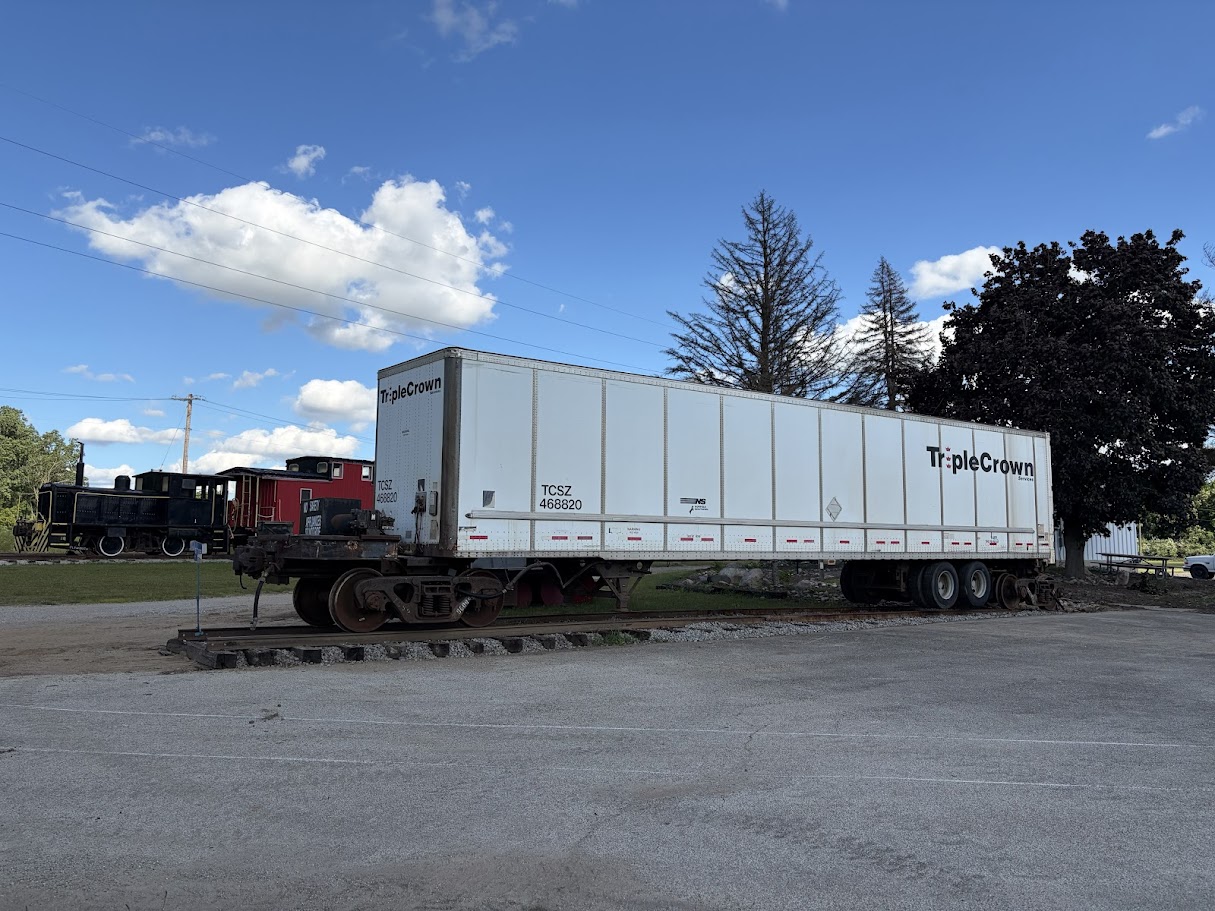
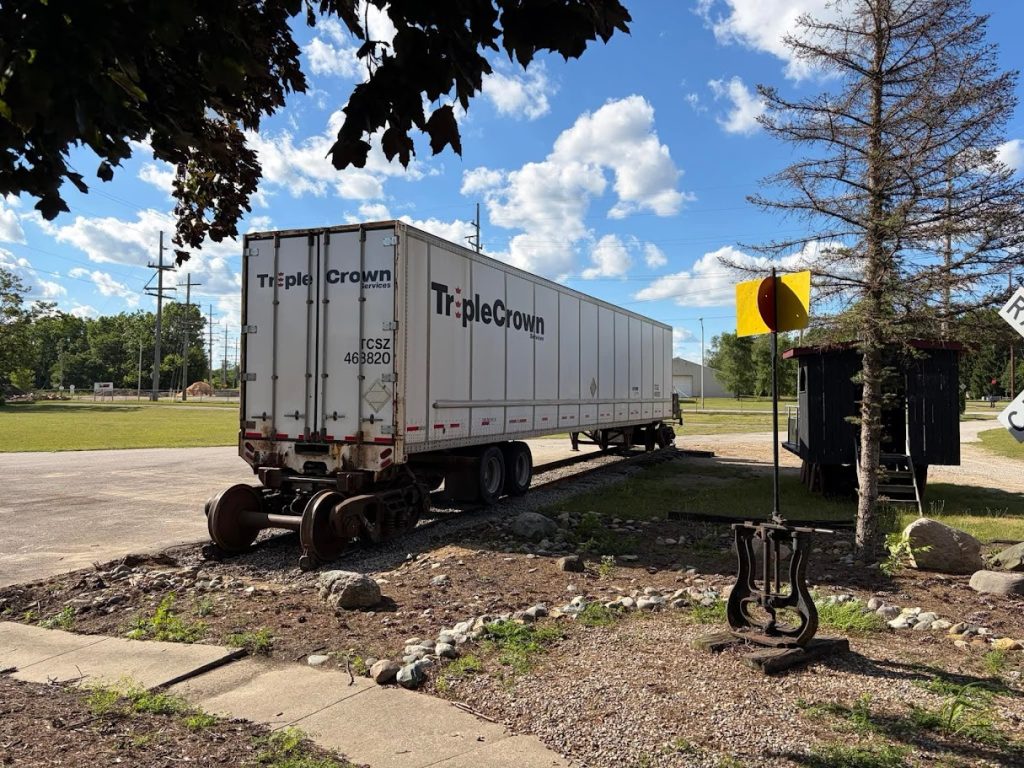
Some of our volunteers have been hard at work this spring clearing a few trees around our office and building a new display track for our Triple Crown Services RoadRailer, Bogie, and CouplerMate! The three pieces are now assembled and proudly displayed at the front of our campus.
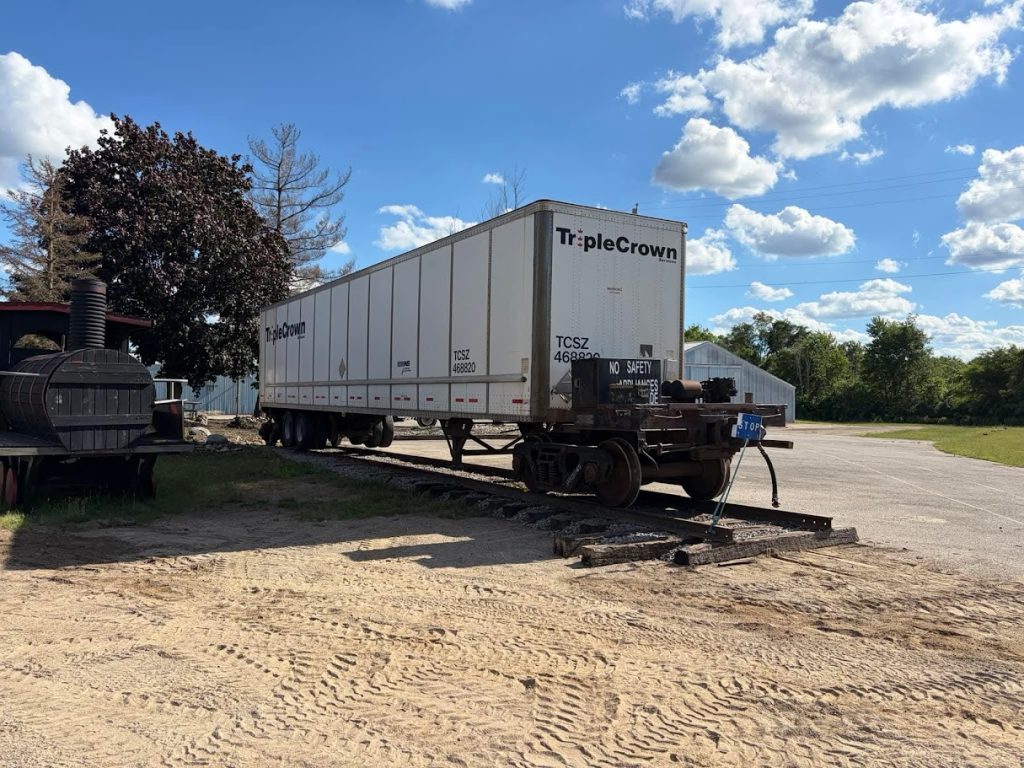
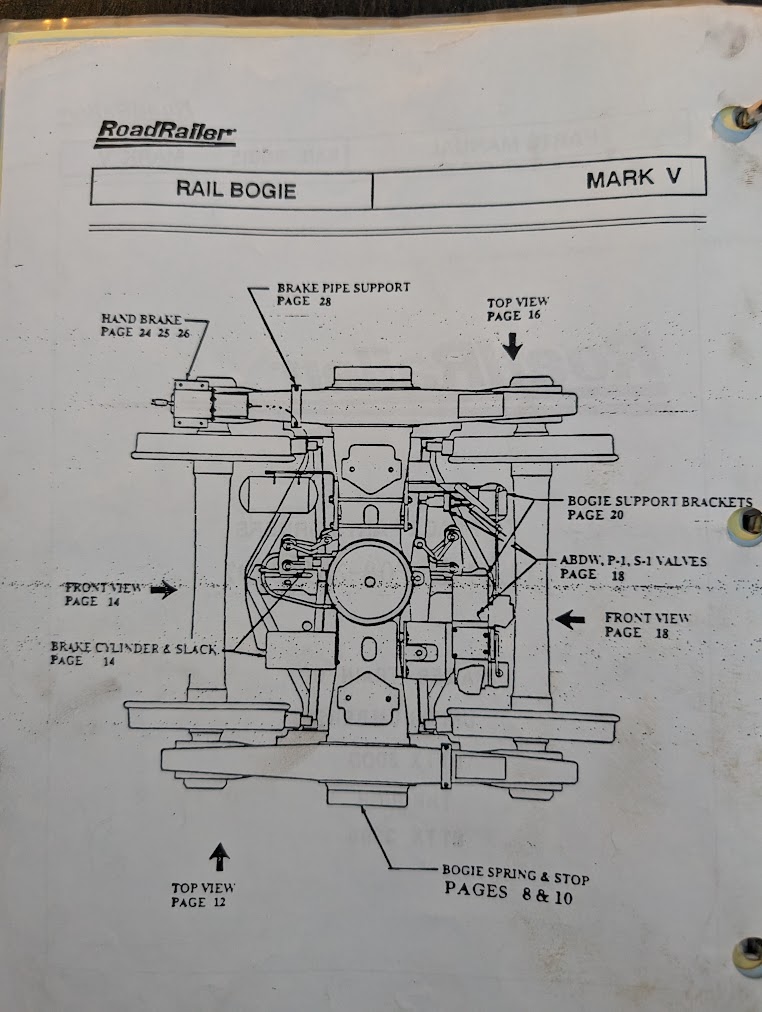
The RoadRailer technology was originally invented by the Chesapeake & Ohio Railway in the 1950’s but continuously evolved into the configuration of elements now on display at our office. Wabash National manufactured these unique pieces to solve the age-old question of how to transfer freight between the road and the rails. This “Mark V” design was the epitome of the RoadRailer concept: a mostly standard semi-trailer with a few small modifications that afforded easy attachment to a separate rail-based bogie. The rail components attach to the trailer using a unique pin system, which you can now see up close!
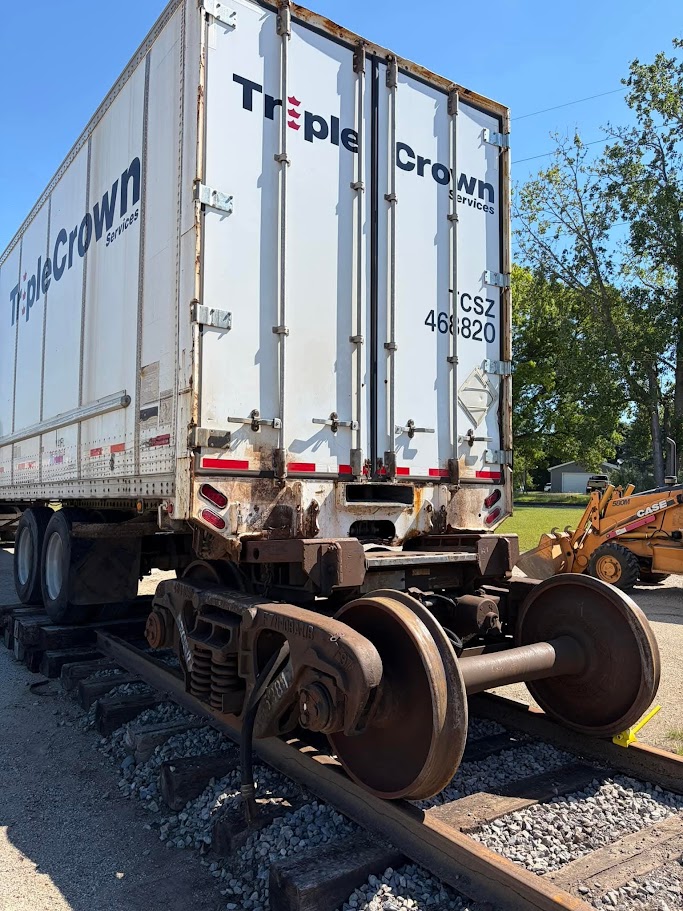
At the very front of the train, the CouplerMate makes the transition between the RoadRailer pin system and a standard railroad coupler. The back of the trailer has a specially designed frame that locks into the top of the bogie, and there is a pocket to receive the tongue of the following trailer. Other than the tongue at the front and the pocket and thicker frame at the rear, the RoadRailer trailer is not too different from the countless other semi-trailers you see on the road. This system allowed freight to remain inside the trailer, eliminating extra time needed to transfer the freight at each end of the rail journey. To top it off, nearly the only equipment required to assemble or break down a train is a forklift to move the Bogie out of the way and a semi-truck to move the trailers around. With this simple and efficient system, the RoadRailers provided a seamless solution to keeping the country’s freight moving.
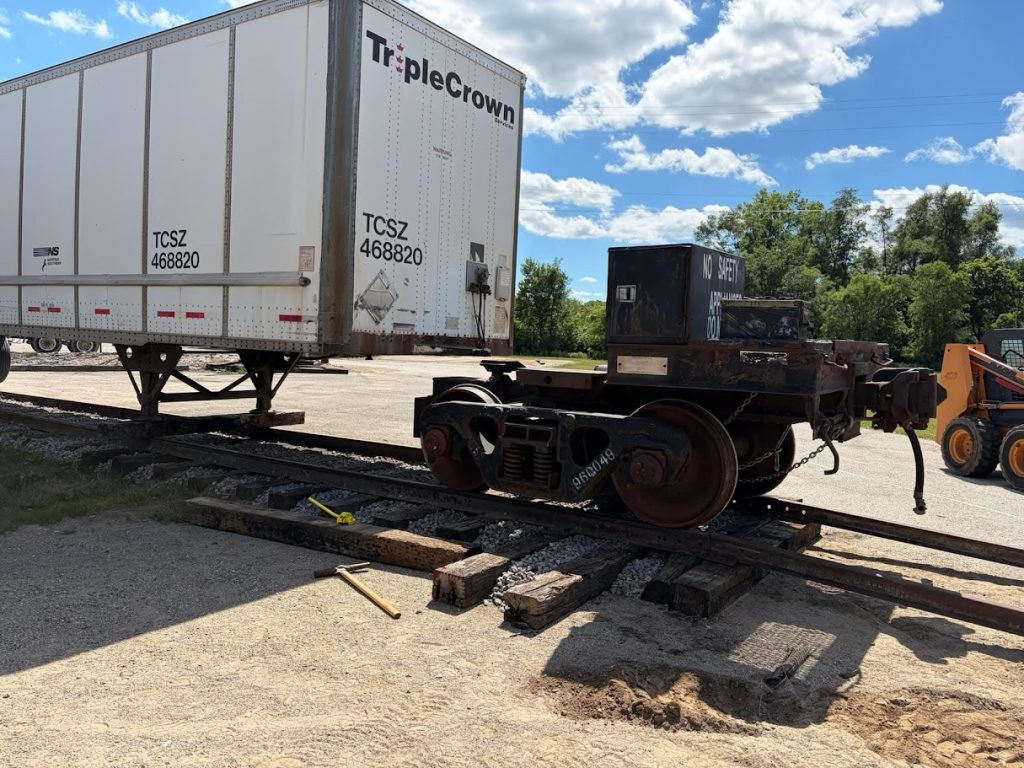
With our three pieces assembled, there is no better way to get a peek into this revolutionary segment in railroading history. As time and funding allows, our volunteers will begin to fill the trailer with the extensive documentation we received along with the trailer and rail component donation. Everything from historical photographs, construction drawings, operations manuals, instructional videos, to models will fill this trailer to the brim with all things RoadRailer history. We plan to build access right into the back of the trailer to allow guests to view all of the phenomenal artifacts now in our collection.
If you would like to help push this project forward, please consider making a donation here on our website or becoming a member to volunteer your time! We are always looking for more hands to help us preserve our collection for generations to come. Additionally, if you have any RoadRailer artifacts in your collection that you would consider donating, we will gladly incorporate it into our future displays inside the trailer! We have many pieces on hand to tell the RoadRailer story, but we are always looking for more to make this display truly shine.